10 Easy Beginner Indoor Plants

A first plant should not make you feel like you need a botany degree. The best beginner plants are forgiving, adaptable, and quick to tell you what they need before things go too far.
The plants below are popular for a reason. They tolerate normal indoor conditions, bounce back from small mistakes, and offer enough variety to make collecting them fun. If you are looking for Houseplants for beginners, start here.
This guide covers 10 easy indoor plants, including why each one is beginner-friendly, what kind of light it prefers, how often to water it, and which varieties are worth knowing.
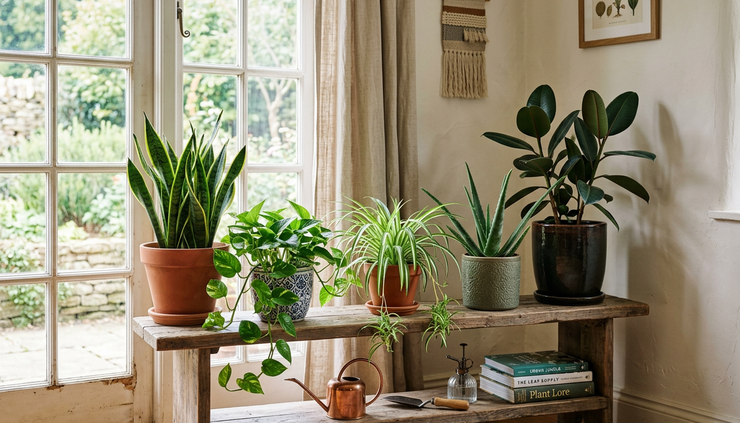
What makes a plant easy for beginners
Easy plants are not “no-care” plants. They still need light, water, and the good pot. What makes them beginner-friendly is that they usually survive if conditions are not perfect.
Most low maintenance houseplants have a few things in common:
They handle average home humidity.
They do not need constant pruning.
They can tolerate missed watering.
They grow in normal potting mix.
They give visual clues when something is wrong.
The three biggest care factors are light, watering, and drainage.
Bright indirect light works for many houseplants. That means the plant sits near a window but the sun never touches their leaves. A north or east-facing window is often gentle. A few feet back from a south or west-facing window can also work.
Watering is where most new plant parents struggle. Most new plant parents either overwater which i call over loving or forget they had a plant to water in the first place. I suggest also picking plant based off the amount of time and attention you have available to give a plant.
Drainage matters just as much. New plant parents that are scared to underwater will buy a pot without holes thinking that will save the plants life often times it does the opposite. The water built up in the base of the pot with suffocate the roots. A pot with a few drainage holes helps prevent soggy roots. If you love decorative pots without holes, keep the plant in a plastic nursery pot and drop that into the decorative container. then before watering check to insure all water is gone from decorative cover
Plant | Best light | Watering style | Why it is easy |
Snake plant | Low to bright indirect light | Let soil dry fully 1-2x per month | Thrives in many light conditions & low watering needs |
Pothos | Low to bright indirect light | Water when partly dry. 1x per week | Fast-growing and Fun |
Spider plant | Bright indirect light | Water when top soil dries about 1x per week | Bounces back well |
Syngonium | Medium to bright indirect light | Keep lightly moist 1x per week | Forgiving and fast grower |
Aloe vera | Bright light to bright indirect light | Let soil dry fully 1-2x per month | Stores water in leaves, useful |
Mother of thousands | Bright light to bright indirect light | Water sparingly 1x per month | Produces plantlets easily |
Dieffenbachia | Medium to bright indirect light | Water when top inch dries 3x a month | Adapts well indoors |
Chinese evergreen | Low to medium indirect light | Water when partly dry 3x per month | Tolerates lower light and colorful |
Cuban oregano | Bright light to Bright indirect light | Let soil dry somewhat 3x per month | Hardy, fragrant, and edible, |
Rubber tree | Bright indirect light | Water when top soil dries 1x per week | Strong grower with sturdy leaves |

Ten easy beginner plants and how to care for them
Snake plant

Snake plant "Laurentii" (Left) & Pothos "Satin Pothos" (Right)
Snake plant, also called Mother-in-law Tongue, is one of the classic houseplants that are hard to kill. The sciencific name is Sansevieria, and it comes in lots of varieties. Its thick, upright leaves store water, so it does not panic if you forget to water for a while. This makes it a great first plant for busy people, frequent travelers, or anyone still learning plant routines. They are a great housewarming present since they naturally clean the air.
Why it is easy
Snake plants tolerate low light better than many houseplants. They also prefer to dry out between waterings, which means they are less needy than tropical houseplants that want constant moisture.
Light needs
Snake plants can grow in low, medium, or bright indirect light. They grow fastest in bright indirect light, but they can survive in dim corners as long as there is a window in the room.
Watering needs
Let the soil fully dry before watering again. In many homes, that may means water only 1-2x per month, depending on light, temperature, pot size, and season.
The biggest mistake is overwatering. If the leaves become mushy near the base, the soil is staying too wet.
Beginner tips
Use a well-draining potting mix. A cactus or succulent mix works well, or you can add perlite to regular indoor potting mix. They tend to be pretty simple though any soil will do fine.
Snake plants come in many varieties. Popular choices include ‘Laurentii’ with yellow-edged leaves, ‘Moonshine’ with silvery foliage, ‘Black Coral’ with dark banding, and ‘Bantel’s Sensation’ with narrow striped leaves.
Snake plants are can cause digestional upset if ingested by animals or children, yet normally they dont present as issue. Use discretion based on your animal and children's behavior.
Pothos
Pothos is a confidence-building plant. It grows quickly, trails beautifully, and can recover from missed waterings. If the leaves droop that just simplymeans it needs water and will perk back up after a drink. When just starting having the plant droop a bit can be helpful to get you to learn how to properly care for them.
Why it is easy
Pothos adapts to many indoor spaces and gives clear signals. Droopy leaves often mean it is thirsty. Yellow leaves can point to overwatering, old growth, or too little light.
This plant is also easy to propagate from cuttings, which makes it fun to share.
Light needs
Pothos does well in low to bright indirect light. Variegated types need more light to keep their patterns strong. In too little light, cream or yellow markings may fade to green.
Avoid harsh direct sun, which can burn the leaves.
Watering needs
Water when the top 1 to 2 inches of soil feel dry. Watering once a week is typical, but also check before watering. If topsoil is still moist you don't need to water
Beginner tips
Let it trail from a shelf, climb a moss pole, or grow from a hanging basket. Trim long vines if you want to contain it more and it will just become fuller. Place cuttings/trimmings in water and they will root, then after a few weeks you have anew plant that can be placed in dirt
Popular varieties include golden pothos, marble queen pothos, neon pothos, jade pothos, manjula pothos, satin pothos and n’joy pothos.
Pothos is does cause digestional upset if ingested, so keep it away from curious pets and small children.
Spider plant
Spider plant is cheerful, fast-growing, and generous. Mature plants send out arching stems with baby plantlets, often called spiderettes. Those babies can be rooted into new plants, which is one reason spider plants are beloved by beginners. Spider plants are also great pet-friendly option since when cats chew on the leaves, it can give them a catnip-like high. This makes them an attractive choice for pet owners looking to add some greenery to their home.
Why it is easy
Spider plants tolerate a wide range of indoor conditions and recover well from small care mistakes. They are also non-fussy about humidity compared with many tropical houseplants.
Light needs
Spider plants prefer bright indirect light, but they can handle medium light too. Direct midday sun can scorch the leaves, especially the white-striped parts.
If the plant stops producing babies, give it more bright indirect light and a little patience.
Watering needs
Water when the top inch of soil feels dry. Spider plants like even moisture, but they do not want to sit in water.
Brown leaf tips are common and not always a disaster. They can come from underwatering, low humidity, mineral buildup, or fluoride in tap water.
Beginner tips
If your plant gets crispy tips, trim them with clean scissors. Use filtered water or let tap water sit out overnight if your water is very treated.
Spider plant varieties include ‘Vittatum’ with a pale center stripe, ‘Variegatum’ with white leaf edges, ‘Bonnie’ with curly leaves, and solid green spider plant.
Spider plants are often considered a pet-friendlier choice, though pets may still chew them, so keep an eye on curious nibblers to avoid them fully destroying the plant
Syngonium

Syngonium, also known as arrowhead plant, has soft arrow-shaped leaves and comes in beautiful colors. It starts compact, then may trail or climb as it matures.
Why it is easy
Syngonium grows well in normal homes and shows stress clearly. If it wilts, it often needs water. If it gets long and sparse, it likely needs more light or pruning.
It is one of the easiest indoor plants for people who want colorful foliage without a lot of drama.
Light needs
Give syngonium medium to bright indirect light. Green varieties can handle lower light, while pink, cream, and highly variegated types need brighter conditions to keep their color.
Direct sun can fade or burn delicate leaves.
Watering needs
Water when the top inch of soil feels dry. Syngonium likes moist soil, so once a week watering is perfect.
If leaves turn yellow and the soil is staying too wet, go longer in between waterings.
Beginner tips
Pinch or prune leggy stems to keep the plant bushy. You can let it trail from a hanging pot or give it a small pole to climb.
Popular varieties include ‘White Butterfly’, ‘Neon Robusta’, ‘Pink Allusion’, ‘Berry Allusion’, and ‘Maria Allusion’. Some collectors also love variegated types such as albo syngonium.
Syngonium can cause issues if eaten, so place it safely away from pets and children.
Aloe vera

Aloe vera is a sunny-window favorite. Its fleshy leaves store water, so it prefers neglect over too much attention. That makes it a natural fit for anyone who forgets watering day. Aloe can even be edible depending on the variety you get.
Why it is easy
Aloe is a succulent, so it is built for dry spells. It does not need high humidity, frequent feeding, or constant fussing.
Light needs
Aloe vera does needs bright light. A sunny windowsill is usually best, especially an east, south, or west-facing window. If your aloe stretches or leans toward the light, it likely needs a brighter spot.
Move it gradually into stronger sun. Sudden intense sun can stress the leaves.
Watering needs
Let the soil dry out completely, then water deeply. Empty any saucer after watering.
In winter, aloe may need much less water because growth slows down.
Beginner tips
Use a gritty cactus or succulent mix and a pot with excellent drainage. A terracotta pot can help soil dry faster.
Aloe varieties include classic Aloe vera, ‘Aloe vera var. chinensis’ with spotted leaves, Aloe aristata often called lace aloe, and Aloe brevifolia, known as short-leaved aloe. Some are true aloe relatives rather than the same species, but they offer a similar easy-care look.
Aloe can be toxic (not deadly) to pets if ingested, so keep it out of reach.

Mother of thousands
Mother of thousands, usually Kalanchoe daigremontiana or related Kalanchoe species, is fascinating. Small plantlets grow along the leaf edges and eventually drop into the soil, where they can root.
Why it is easy
This plant is extremely good at reproducing, which gives beginners a fun win. It also stores water in its leaves, so it does not need constant watering.
Light needs
Mother of thousands prefers bright light. A sunny windowsill is ideal. Without enough light, stems can stretch and look weak.
Some direct morning sun works well. Strong afternoon sun may be too intense behind hot glass, especially in summer.
Watering needs
Water sparingly. Let the soil dry out well between waterings, then water thoroughly.
Too much water can cause root rot. If the leaves feel soft and the soil is damp, wait longer before watering again.
Beginner tips
Use cactus or succulent mix. Remove fallen plantlets if you do not want them spreading into nearby pots. This plant can be very productive.
Common types include Kalanchoe daigremontiana, Kalanchoe laetivirens, and Kalanchoe delagoensis, often called mother of millions. The names are sometimes mixed up in plant shops, but the care is similar.
Mother of thousands is toxic if ingested by people or animals. It can also spread easily in warm climates, so keep it contained and dispose of extras responsibly.
Dieffenbachia

Dieffenbachia, also called dumb cane, has large patterned leaves that make a room look lush without requiring advanced care. It is a good pick if you want a bold foliage plant that grows well indoors.
Why it is easy
Dieffenbachia tolerates average home conditions and grows in medium light. It does not need direct sun, special humidity cabinets, or daily attention.
Light needs
Give it medium to bright indirect light. Too much direct sun may scorch the leaves. Too little light can make stems weak and reduce variegation.
A spot a few feet from bright window with filtered light is ideal.
Watering needs
Water when the top 1 to 2 inches of soil feel dry. 3x a month will work for most peoples homes. Dieffenbachia likes moisture, but soggy soil can damage roots.
If lower leaves yellow one at a time, that can be part of normal aging. If many leaves yellow at once, you may be watering to often and light.
Beginner tips
Rotate the pot every couple of weeks so growth stays even. Wipe the leaves with a damp cloth when they get dusty, since large leaves collect dust quickly.
Popular varieties include ‘Camille’, ‘Tropic Snow’, ‘Compacta’, ‘Reflector’, and ‘Carina’.
Dieffenbachia is toxic and can irritate the mouth and/or cause itchy skin because of calcium oxalate crystals in sap. Wear gloves when pruning if you have sensitive skin when pruning. Always wash hands after pruning, and keep it away from pets and children.
Chinese evergreen

Chinese evergreen, or Aglaonema, is one of the best indoor plants for lower-light rooms like most bedrooms or bathrooms . It has attractive patterned leaves and a calm, steady growth habit.
Why it is easy
Chinese evergreen handles lower light better than many colorful houseplants. It also adapts well to normal indoor humidity and does not demand frequent watering.
Light needs
Green varieties can tolerate low to medium indirect light. Pink, red, silver, and cream varieties need brighter indirect light to keep their color strong.
Avoid direct sun, which may burn the leaves.
Watering needs
Water when the top 1 to 2 inches of soil feel dry. It prefers to dry slightly between waterings. normally 3x per month works great
Cold drafts and wet soil are a bad mix for Chinese evergreen. Keep it away from chilly windows in winter.
Beginner tips
Popular varieties include ‘Silver Bay’, ‘Maria’, ‘Red Siam’, ‘Lady Valentine’, ‘Cutlass’, and ‘Emerald Beauty’.
Chinese evergreen is toxic if ingested, so use the same care you would with pothos or snake plant around pets and children.
Cuban oregano

If you know me at all you know I had to include a herb. Cuban oregano, also called Plectranthus amboinicus, is a thick-leaved, aromatic plant that smells amazing when touched. It is often grown as an herb, but it also makes a charming houseplant.
Why it is easy
Cuban oregano is sturdy, fast-growing, and easy to propagate. Its fleshy leaves help it tolerate short dry periods better than many soft herbs.
It is a good choice if you want a plant that feels useful as well as decorative.
Light needs
Give Cuban oregano bright indirect light or a few hours of gentle direct sun. It can grow on a sunny windowsill.
If stems stretch and leaves become smaller, move it closer to the light. A great plant fora patio or balcony.1-0
Watering needs
Let the top part of the soil dry before watering. Cuban oregano likes moisture during active growth, but it does not want soggy roots.
Because the leaves are thick, it can handle being a little dry better than being constantly wet.
Beginner tips
Pinch the tips often to keep the plant full and bushy. The cuttings root easily in water or soil.
There are several forms, including green Cuban oregano, variegated Cuban oregano with creamy edges, and closely related ornamental Plectranthus types such as ‘Mona Lavender’ and Swedish ivy. They are not all identical herbs, but they share a similar easy-growing nature.
If using Cuban oregano in cooking, confirm the plant identity and use clean, untreated leaves.
Rubber tree
Rubber tree, or Ficus elastica, looks polished and strong with glossy upright leaves. It can grow into a small indoor tree over time, but it starts as a manageable houseplant.
Why it is easy
Rubber trees are tougher than many ficus plants. Once they settle into a bright spot, their care is simple and steady.
They are one of the easiest indoor plants if you want something taller than a tabletop plant.
Light needs
Rubber trees prefer bright indirect light. They can handle some gentle morning sun. Variegated types need brighter light than dark green varieties.
In low light, growth slows and lower leaves may drop or droop.
Watering needs
Water when the top 1 to 2 inches of soil feel dry. Water thoroughly, then let excess drain away.
Rubber trees dislike sitting in wet soil. They also dislike being moved constantly, so choose a bright location and leave her be
Beginner tips
Wipe leaves to keep them shiny and help them take in light. Rotate the pot for even growth. If the plant gets too tall, prune the top to encourage branching.
Popular varieties include ‘Burgundy’ with very dark leaves, ‘Ruby’ with pink and cream variegation, ‘Tineke’ with green and cream leaves, and ‘Robusta’ with classic broad green leaves.
Rubber tree sap can irritate skin and is toxic if ingested, so handle pruning carefully and keep it away from pets and children.

Simple plant tips that make every beginner plant easier
Even easy houseplants do better with a few good habits. These are small routines, but they prevent most common problems.
Check soil before watering
Do not water on a strict calendar unless the plant and your home conditions truly match that rhythm. A plant in bright light dries faster than one in low light. A small terracotta pot dries faster than a large plastic pot.
Use pots with drainage
Drainage holes are beginner-friendly. They make it easier to water thoroughly without drowning the roots.
Start with one or two plants
It is tempting to buy every pretty plant at once. Start with a first plant, learn its rhythm, then add more. Pothos, snake plant, and spider plant are especially good starting points.
Match the plant to the light you have
Aloe vera and mother of thousands need bright light. Chinese evergreen and snake plant can handle lower light. Pothos and syngonium sit nicely in the middle.
Expect older leaves to fade sometimes
One yellow leaf does not mean failure. Plants shed old leaves as they grow. Look for patterns instead. Many yellow leaves, mushy stems, pests, or a bad smell from the soil are clearer warning signs.
Keep an eye on pets and kids
Many common houseplants are irritating or toxic if eaten. If pets chew plants, pick placement carefully, use hanging baskets, or choose pet-friendlier options.
Do not repot too soon or to often
A new plant needs time to adjust. Unless the soil is very poor, the plant is root-bound, or the pot has no drainage, wait a few weeks before repotting.
Give plants a stable home
adjust to their surroundings. Moving them every few days can cause stress, especially for rubber trees and other ficus plants.
Plants

How to choose your best beginner plant
The easiest plant is the one that fits your space and habits.
If your home has low light, choose snake plant, Chinese evergreen, or green pothos. If you have a sunny windowsill, aloe vera, mother of thousands, or Cuban oregano will be happier. If you want a plant that grows fast and shows progress, choose pothos, spider plant, or syngonium. If you want a larger statement plant, start with a rubber tree or dieffenbachia.
For a very simple beginner trio, try:
Snake plant for upright structure and low water needs
Pothos for trailing growth and easy propagation
Spider plant for quick rewards and baby plantlets
These plants do not need perfect care. They need observation. Look at the leaves, feel the soil, notice how the plant responds, and adjust slowly.
That is the real skill of plant care. It is less about memorizing rules and more about building a calm routine. Start with one forgiving plant, give it the right light, water when the soil says it is time, and let your confidence grow leaf by leaf.
Comments